What Is DataOps: The Ultimate Guide for 2026
|
9
min read

So, what exactly is DataOps? In short, it’s about applying the hard-won lessons of DevOps to the world of data. It’s a methodology focused on collaboration, automation, and continuous improvement for the entire data lifecycle.
Think of it as the modern answer to slow, unreliable data pipelines and the frustrated teams who depend on them.
Table of Contents
What Is DataOps and Why Does It Matter Now?
DataOps marks a radical departure from the slow, siloed world of traditional data management. Instead of treating data analytics as a rigid, step-by-step process, DataOps transforms it into a fast, flexible, and automated production line. The goal is straightforward: deliver high-quality, trustworthy data at the speed your business actually operates.
This approach really began to take shape between 2015 and 2018, born from the need to manage increasingly complex data pipelines. The impact is hard to ignore. According to research from IBM, organizations adopting DataOps practices can slash data delivery times by an average of 40% while boosting data quality by 35%.

From Slow and Manual to Fast and Automated
In a traditional setup, it's common for data engineers, analysts, and data scientists to work in separate silos. This creates massive bottlenecks. A simple request for a new report or dataset can take weeks, and by the time it arrives, the information is often stale or just plain wrong. DataOps is designed to tear down these walls.
To understand the shift, it's helpful to see a direct comparison. The table below outlines how DataOps fundamentally changes the approach to managing data.
DataOps vs. Traditional Data Management
Aspect | Traditional Data Management | DataOps |
|---|---|---|
Workflow | Linear, waterfall-style projects with long development cycles. | Agile, iterative sprints focused on rapid delivery and feedback. |
Automation | Mostly manual processes for testing, deployment, and monitoring. | Heavily automated testing (CI) and deployment (CD) for pipelines. |
Collaboration | Siloed teams (IT, data engineering, business) with formal handoffs. | Cross-functional teams with shared ownership from development to production. |
Quality | Reactive quality control, often finding errors in production. | Proactive and continuous monitoring for quality, freshness, and schema. |
Speed | Changes take weeks or months to implement. | Changes and new features can be deployed in hours or days. |
Focus | Centered on infrastructure and delivering raw data. | Focused on delivering value-ready "data products" to business users. |
This shift from a rigid, manual process to a fluid, automated one is at the heart of DataOps. It’s not just about doing the same things faster; it’s about creating a fundamentally more reliable and responsive data culture.
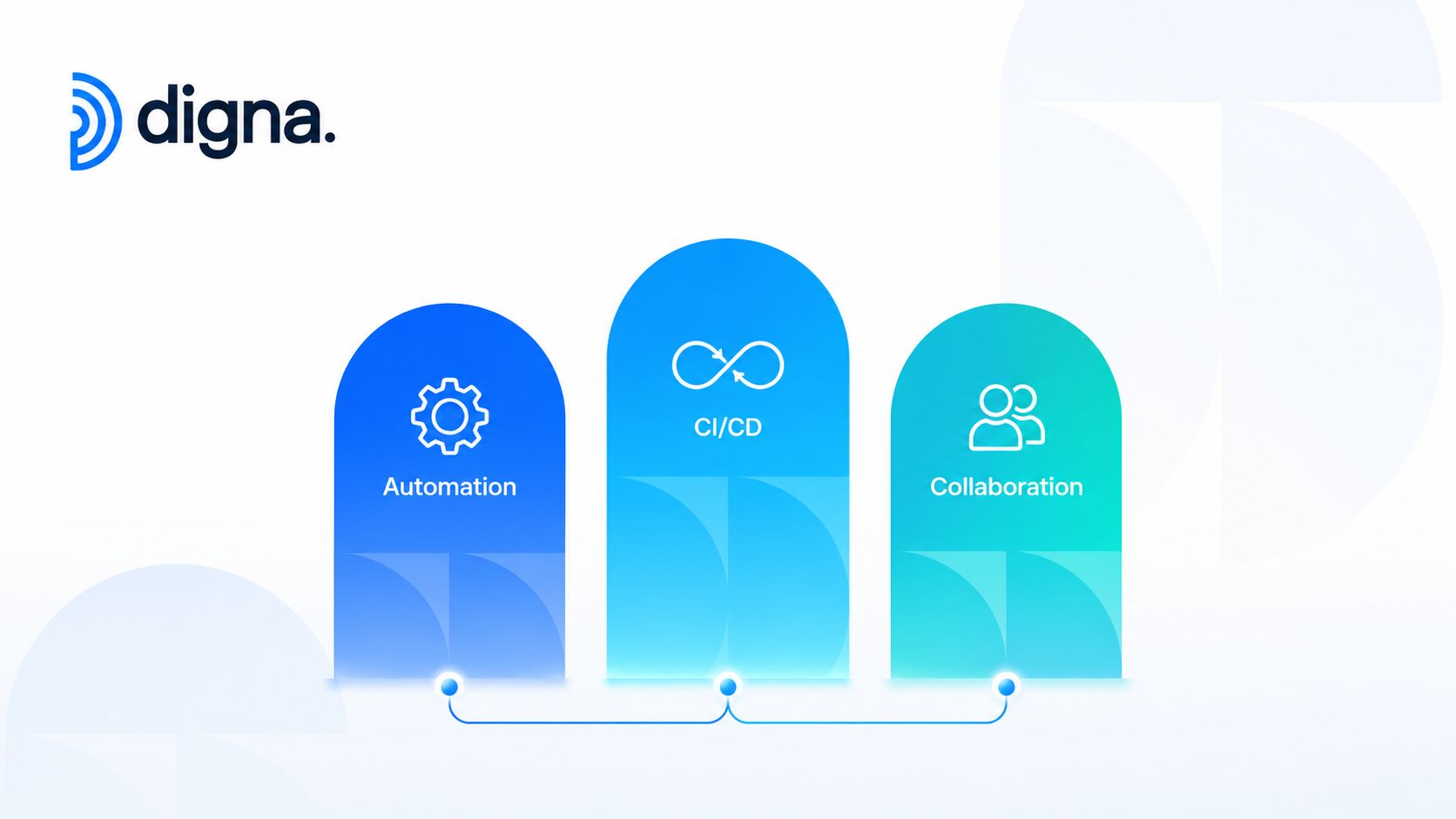
This collaborative framework empowers teams to build, test, and release data pipelines quickly and with confidence. It’s built on a few core ideas:
Automation: Automate everything that can be automated—from data quality checks to pipeline deployments. This minimizes manual errors and lets your team focus on more valuable work.
Continuous Integration/Continuous Delivery (CI/CD): By applying CI/CD, changes to data pipelines are automatically tested and rolled out. This allows teams to iterate in hours, not weeks.
Collaboration: DataOps fosters a shared sense of ownership between the people who build the pipelines and the people who use the data. This ensures the final data products actually solve real business problems.
Adopting these practices is key to building a modern and resilient enterprise data platform. The result is a system that not only moves faster but also builds unshakable trust in the data that fuels your most critical decisions.
The Core Principles Driving Successful DataOps
To really get DataOps, you have to look past the buzzwords. It’s not just a new toolset; it’s a cultural and procedural overhaul built on a few foundational ideas that completely change how teams handle data. These principles are the "how" behind the concept, turning the promise of agile data delivery into something you can actually use.
At its core, DataOps is about building an ecosystem that is automated, collaborative, and driven by feedback. It integrates everything from Data Integration and Data Management to Analytics Development and Data Delivery, creating a single, cohesive workflow.
Embrace Total Automation
The first, and arguably most important, principle is simple: automate everything possible. In a traditional data environment, manual work is the biggest bottleneck. Running tests, deploying pipelines, and checking data quality by hand is slow, tedious, and invites human error.
DataOps flips that script.
Instead of a data engineer manually checking if a dataset is fresh, an automated monitor does it. Instead of a developer waiting for a maintenance window to push code, an automated script handles the deployment instantly. This relentless focus on automation frees up your team from fighting fires and lets them focus on analysis and innovation—the work that actually creates value.
Apply CI/CD to Data Pipelines
Borrowed from its DevOps cousin, Continuous Integration and Continuous Delivery (CI/CD) is the engine that drives both speed and reliability in DataOps.
Continuous Integration (CI): Every time a change is committed to a data pipeline—a new SQL transformation, a Python script, anything—it’s automatically tested. This simple step ensures new code doesn’t break what’s already working.
Continuous Delivery (CD): Once the tests pass, the changes are automatically deployed to production. This is what allows teams to iterate on data products in hours or days, not the weeks or months we used to accept as normal.
By implementing CI/CD for data, organizations can drastically reduce the “cycle time” of analytics, moving from an idea to a deployed, value-generating insight with unprecedented speed and confidence. This is where agility truly comes to life.
Foster Intense Collaboration
More than anything, DataOps is about breaking down the silos that have always plagued data teams. It pushes for a culture where data engineers, data scientists, analysts, and business users operate as one cohesive unit.
This isn’t just about being friendly; it creates a tight feedback loop that is essential for trust. When an analyst spots an issue in a dashboard, they can talk directly to the engineers who can trace it back to the source and fix it.
This constant communication and shared ownership build trust—not just among team members, but in the data itself.
How DataOps Differs from DevOps and MLOps
If the term “DataOps” sounds familiar, it’s because it was inspired by its famous cousin, DevOps. While they aren't the same, understanding their differences—along with the related field of MLOps—is key to running a modern data stack. All three disciplines are built on automation, collaboration, and speed, but they focus on very different things.
DataOps borrows a lot of great ideas from DevOps, like continuous integration/continuous delivery (CI/CD), automated testing, and tight collaboration between teams. But here’s the key difference: DevOps applies these principles to the software development lifecycle to ship reliable applications. DataOps applies them to the data pipeline to deliver reliable analytics.
The end product in DevOps is working code. In DataOps, the end product is trustworthy data.

From DevOps to DataOps: A Shared Blueprint
Think of DevOps as the blueprint for building and shipping software quickly and reliably. It broke down the silos between development (Dev) and operations (Ops) teams to automate how applications are built, tested, and released.
DataOps takes that same blueprint and adapts it for the unique chaos of the data world. Code is generally predictable, but data is not. It can show up late, arrive with broken fields, or change its entire structure without warning. DataOps adds a layer of constant monitoring and validation designed specifically to manage this volatility, ensuring data quality from the source all the way to the final dashboard.
Where Do MLOps and Data Engineering Fit In?
To complete the picture, we need to bring in MLOps and data engineering. These are two related, but very distinct, fields.
MLOps (Machine Learning Operations) is focused on one thing: getting machine learning models into production and keeping them there. It’s all about automating the deployment, monitoring, and management of ML models. While it depends on good data, its primary output is a predictive model, not the data pipeline itself.
Data Engineering is the foundational practice of building and maintaining the infrastructure that data pipelines run on. DataOps doesn't replace data engineering; it makes it better. It provides the agile framework and automation that helps data engineers build more reliable systems, faster.
DataOps is the connective tissue that links the raw data infrastructure built by engineers to its final use in analytics or AI. It ensures pipelines are robust and that the data feeding into ML models is actually trustworthy.
To help clear up any confusion, it’s useful to see these disciplines side-by-side. The table below breaks down what makes each one unique.
Comparing Data Disciplines: DataOps, DevOps, MLOps, and Data Engineering
Discipline | Primary Focus | Main Goal | Key Artifact |
|---|---|---|---|
DataOps | The entire data lifecycle | Fast delivery of high-quality, trusted data | Validated datasets & analytics |
DevOps | The software delivery lifecycle | Fast delivery of reliable applications | Application code |
MLOps | The machine learning model lifecycle | Scalable deployment of ML models | Production-ready ML models |
Data Engineering | Data architecture and infrastructure | Building and maintaining data pipelines | Raw & transformed data |
Each of these disciplines plays a critical role. Data engineering builds the roads, DataOps manages the traffic to ensure it flows smoothly and safely, DevOps builds the vehicles (applications), and MLOps builds the self-driving cars (AI models). They all work together, but each has its own lane.
Of course. Here is the rewritten section, adopting the specified human-like voice, tone, and formatting style.
Real-World Business Wins from Adopting DataOps
The theory behind DataOps is great, but every business leader ultimately asks the same question: "So what?" A well-run DataOps practice isn't just a technical upgrade; it’s the answer to that question, delivering real, measurable business outcomes.
It fundamentally changes how an organization uses data, shifting it from a slow, reactive chore into a source of competitive advantage. Think of a marketing team that gets crucial campaign insights in hours, not weeks. They can reallocate ad spend mid-flight, doubling down on what works and cutting what doesn't. That’s a direct business win.
DataOps closes the gap between the promise of enterprise AI and the reality of business outcomes. It’s what turns pipelines into profit and operational risk into reliable insight.
Faster Time-to-Insight
One of the most immediate benefits is how dramatically it speeds up the entire data lifecycle. In traditional setups, the path from a business question to a data-backed answer is agonizingly long. DataOps breaks through these bottlenecks using automation and closer collaboration.
Scenario: A retail company wants to know how a recent promotion is performing.
Without DataOps: The request gets buried in a backlog for weeks. By the time a report finally lands, the promotion is long over, and the chance to make adjustments is gone.
With DataOps: Automated pipelines feed sales data into the system continuously. Analysts can query validated, fresh information within hours, giving the marketing team immediate feedback to inform their next move.
This speed means insights arrive when they actually matter, enabling proactive decisions instead of reactive clean-up.
Rock-Solid Data Quality and Trust
Bad data is a silent killer of trust, leading to flawed decisions and costly mistakes. A core tenet of DataOps is building confidence by embedding continuous testing and monitoring directly into the data pipelines.
This means problems like broken tables or stale data are flagged automatically, long before they poison a critical financial report or a customer-facing dashboard. When decision-makers know they can count on the numbers, they act with more conviction. For companies like digna that center on data observability, this principle is the key to building a data ecosystem people can actually depend on.
More Efficient and Innovative Teams
Finally, DataOps gives you back your most valuable asset—your people. When data engineers and analysts are stuck fighting fires, patching broken pipelines, and running manual scripts all day, there’s zero time left for innovation.
By automating all that tedious, repetitive work, DataOps frees your team to focus on high-value activities. Instead of just keeping the lights on, they can explore new data sources, build advanced analytical models, and find novel ways for data to drive the business forward. This shift doesn’t just make the team more efficient; it boosts morale and unlocks the innovation you hired them for in the first place.
Your First Steps to Implementing DataOps
Jumping into DataOps doesn't mean you have to rip and replace your entire data architecture. The best way to start is with small, focused actions that build momentum.
Think of it as a series of quick wins. By starting small, you can prove the value of the approach, fine-tune your methods, and get the buy-in you need to scale across the organization.
Start with an Assessment
First things first: you have to be honest about where the pain is. Take a hard look at your current data environment and find the biggest bottlenecks that are slowing down data delivery and killing trust.
Is it the endless manual testing? The slow, painful handoffs between teams? Or are you constantly putting out data quality fires?
Pinpointing these specific problems gives you a clear target for your first DataOps effort. This isn't about fixing everything at once. It's about finding that one high-impact area where automation and collaboration will make an immediate difference. The implementation cycle often starts by identifying current data sources and bottlenecks, then clarifies business needs, and brings together cross-functional teams of data engineers, data scientists, and IT operations. From there, you can document workflows with measurable KPIs and automate ingestion and validation.
Build Your Pilot Team and Select Tools
You don't need a huge team to get started. Assemble a small, cross-functional group of people who are motivated to solve the problem—usually a data engineer, an analyst, and a business stakeholder who feels the pain of the current process.
This core group will own the pilot project from beginning to end.
Next, pick the right tools for the job. Your initial stack should focus on three things: automation, collaboration, and monitoring. When taking your first steps, consider how specialized tools like a Web Scraping API for RAG can automate data acquisition for advanced analytics and AI applications, aligning your tooling with the specific goals of the pilot.
The diagram below shows how a well-executed DataOps framework delivers real business results.
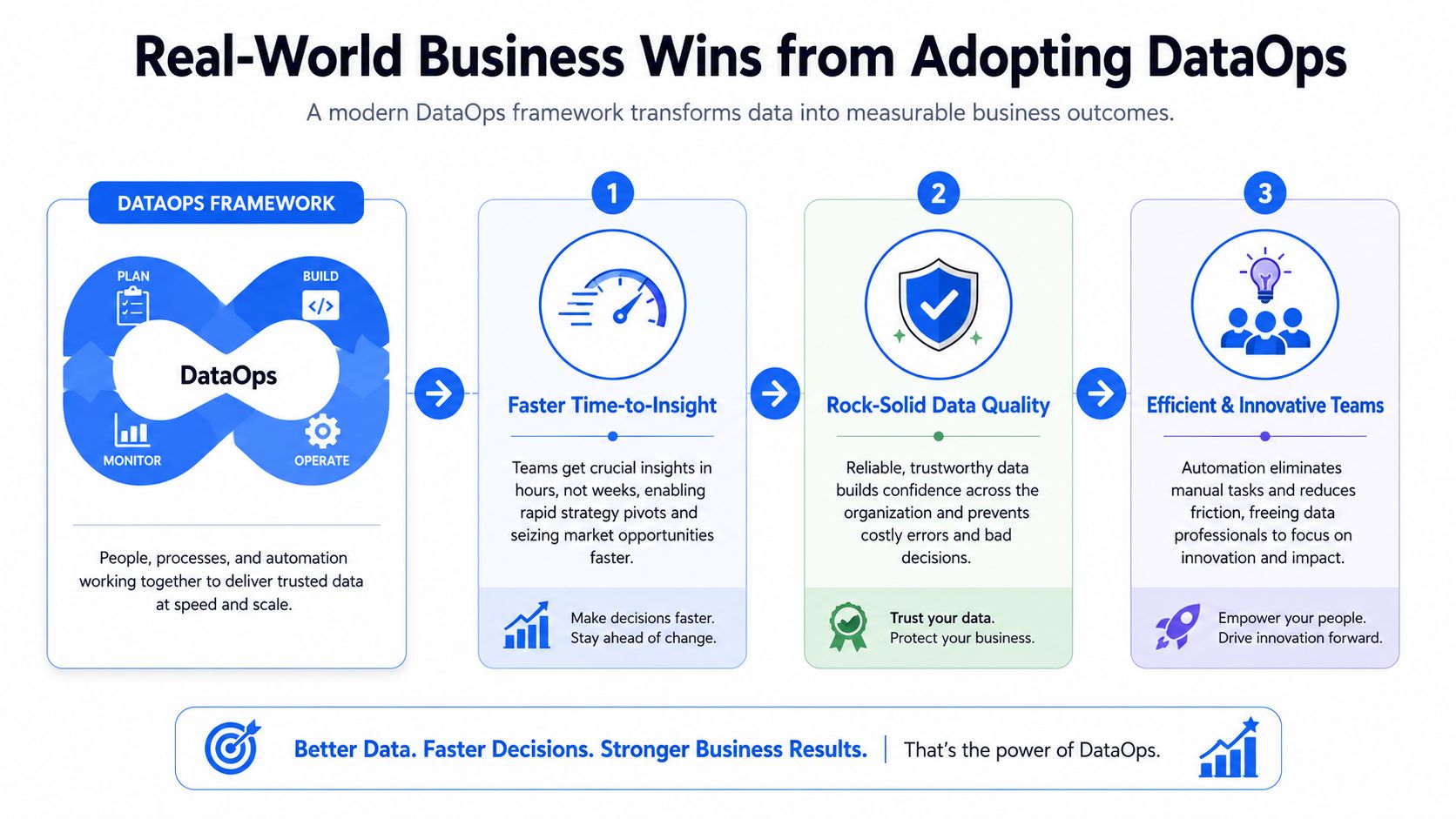
Faster insights, reliable data, and more efficient teams aren't just buzzwords; they are the direct outcomes of applying DataOps principles in a focused, deliberate way.
Launch, Measure, and Iterate
With your team and tools in place, it's time to launch. Pick a single, well-defined data pipeline and apply your new DataOps practices. The goal is to get a quick, visible win that proves this new way of working is worth it.
Your pilot project is your proof of concept. Its success will be the most powerful argument for scaling DataOps. Choose a project that is small enough to complete quickly but meaningful enough to get noticed.
Once your pilot is live, the job isn't done. You have to measure its impact. Start tracking key metrics like:
Cycle time: How long does it take to deliver the data product from start to finish?
Error rate: How many data quality issues are you catching before they hit production?
Team efficiency: How much manual effort did you actually save?
Use this data to show the ROI and refine your process. After a successful pilot, you can start scaling what works, applying the lessons you’ve learned to other projects, and gradually expanding your DataOps practice. To support that expansion, you might want to check out our detailed guide on modern data pipeline architecture.
How Data Observability Powers Modern DataOps
There’s an old engineering mantra that holds especially true for data: you can’t manage what you can’t see. For DataOps, the practice of data observability provides that essential visibility, turning the high-level principles of agility and reliability into a practical, day-to-day reality.
Without it, a DataOps team is essentially flying blind. They have no reliable way to automatically spot data quality rot, catch unexpected schema changes, or even confirm that data has arrived on time. Data observability platforms plug this gap, providing the monitoring, alerting, and root-cause analysis that form the operational backbone of any strong DataOps practice.
The ‘Eyes and Ears’ of Your Data Pipeline
Think of a data observability platform like digna as the automated quality control system for your entire data factory. It doesn’t just look at the final product; it continuously monitors the health of your pipelines across several key dimensions, directly supporting core DataOps principles.
Freshness: Is your data arriving on time? Observability tools track data arrival patterns and alert teams to delays, which helps prevent stakeholders from making decisions based on stale reports.
Schema Changes: Did a source system suddenly add a new column or change a data type? Platforms like digna automatically detect schema drift, protecting downstream jobs and dashboards from breaking without warning.
Data Quality: Are there unexpected nulls, malformed strings, or statistical outliers in the data? Automated quality checks validate data as it moves, catching issues long before they reach a business user.
Volume: Did a key data source suddenly send 10x the normal amount of data—or none at all? Monitoring data volume and record counts helps teams identify upstream failures or processing errors.
This is what makes complex data workflows transparent, turning opaque processes into something manageable and clear.
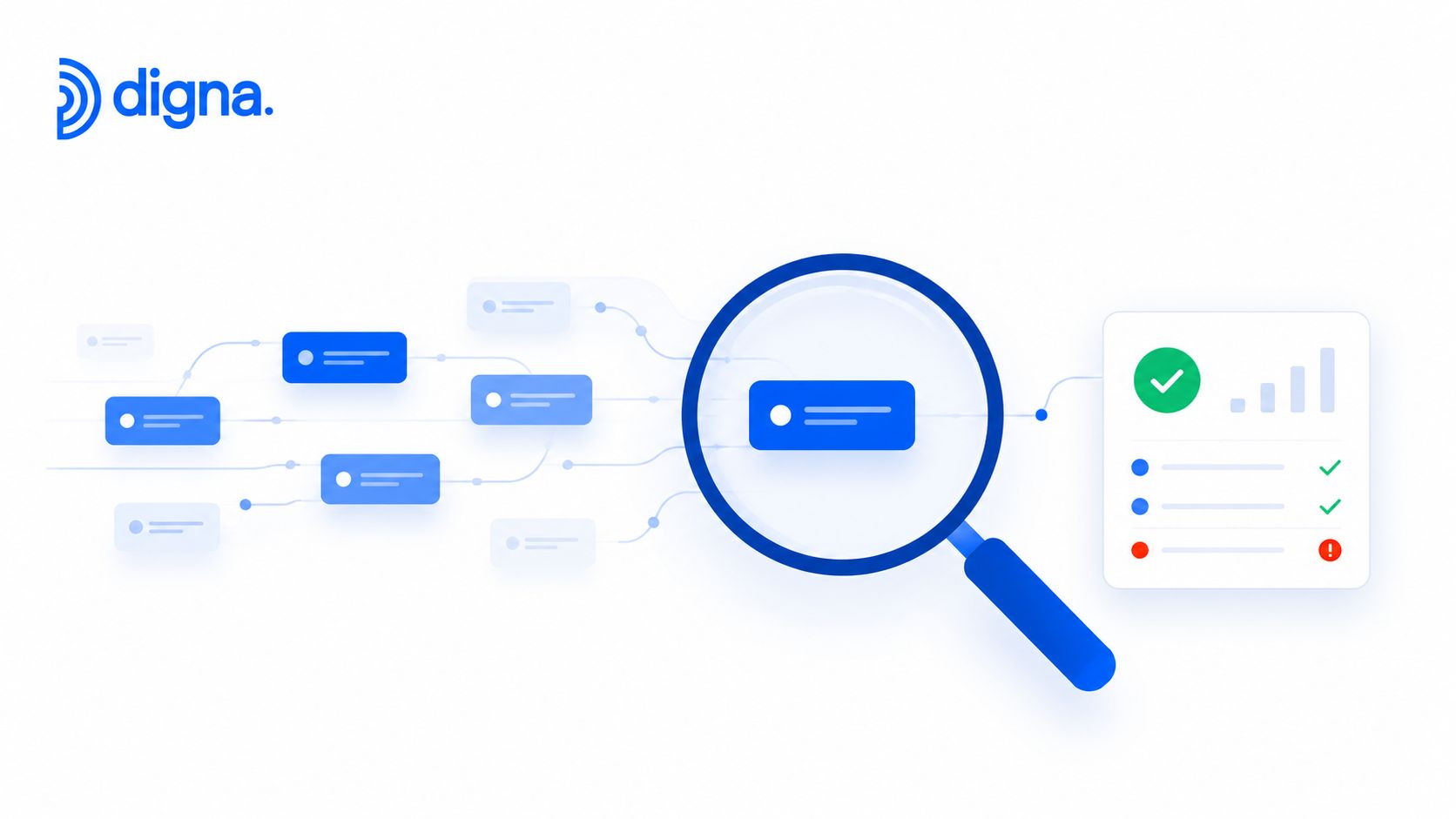
This level of detailed insight allows teams to shift from constant, reactive firefighting to proactive, preventative management—a primary goal for any organization adopting DataOps.
Connecting Platform Features to DataOps Success
The rapid adoption of these platforms isn't a surprise when you look at the numbers. The global data observability market, a cornerstone of modern DataOps, surged from $1.2 billion in 2020 to an estimated $4.8 billion in 2024. This growth is a direct response to the high cost of data issues; data downtime costs the average organization $1.7 million every year.
By providing a single pane of glass into pipeline health, data observability tools automate the monitoring and feedback loops that DataOps demands. This solves real-world problems like broken dashboards, unreliable AI models, and emerging compliance gaps.
Ultimately, the goal of DataOps is to build and maintain trust in your organization's data. Data observability platforms provide the technical foundation to earn that trust—and keep it.
Frequently Asked Questions About DataOps
Even after you get the basic idea, a few practical questions always pop up when teams first look at DataOps. Let's tackle some of the most common ones to clear things up.
What Is the Main Goal of DataOps?
The number one goal of DataOps is to slash the time it takes to get from an idea to a trusted data product. It’s all about shortening that end-to-end cycle.
But speed isn’t the only thing. The other, equally important goal is to do it while guaranteeing exceptionally high data quality and reliability. Fast and wrong is useless.
Do I Need a Big Team to Start with DataOps?
No, you absolutely don’t. This is one of the biggest myths holding teams back. Many people think DataOps means a huge, company-wide project right out of the gate, but the best rollouts almost always start small.
You can get going with a pilot project and a small, cross-functional team. A great starting point usually includes:
A data engineer to build and manage the pipeline.
An analyst who truly gets the business needs.
A business stakeholder who will actually use the data.
This approach lets you prove the value fast and build the momentum you need for a wider rollout.
DataOps is fundamentally a change in process and culture, not just a set of tools. While tools are crucial enablers, the real transformation comes from embracing collaboration, automation, and continuous improvement. It's a mindset shift supported by technology, not defined by it.
Understanding this is the key to getting it right. DataOps is about changing how people work together to ship trusted data. The tools are just there to serve that purpose. Focus on the process first, and you’ll build a foundation that lasts.
Ready to power your DataOps practice with best-in-class observability? See how digna can help you automate quality checks, monitor pipeline health, and build unshakable trust in your data. Get started with digna.
To see how freshness, schema, volume and quality monitoring come together as the feedback loop DataOps depends on, explore data platform observability with digna.
Frequently asked questions
What is DataOps in simple terms?
DataOps applies the lessons of DevOps to data. It is a methodology built on collaboration, automation, and continuous improvement across the whole data lifecycle, turning analytics from a rigid step-by-step process into an automated production line. IBM research cited in the article links it to 40% faster data delivery.
How is DataOps different from DevOps and MLOps?
The difference lies in the end product. DevOps ships reliable application code, DataOps delivers validated datasets and analytics, and MLOps deploys production-ready ML models. DataOps borrows CI/CD, automated testing, and collaboration from DevOps, then adds constant monitoring and validation because data can arrive late, broken, or restructured.
What are the core principles of DataOps?
Three principles carry most of the weight: total automation, CI/CD for data pipelines, and intense collaboration. In practice, every committed change such as a new SQL transformation is tested automatically, passing changes deploy to production, and engineers, analysts, and business users share ownership so issues are traced back quickly.
How do I start implementing DataOps?
Begin with an assessment of your biggest bottleneck, whether manual testing, slow handoffs, or recurring data quality fires. Then form a pilot team of a data engineer, an analyst, and a business stakeholder, launch on one well-defined pipeline, and track cycle time, error rate, and manual effort saved.
Why does DataOps need data observability?
Without observability, a DataOps team is flying blind. Platforms such as digna monitor freshness, schema changes, data quality, and volume, so late data, schema drift, unexpected nulls, or a source suddenly sending 10x its normal volume get flagged before business users see broken dashboards or stale reports.