
digna Data Anomalies
Catch what dashboards miss - automatically
digna Data Anomalies detects unexpected changes in your data quality and business/operational KPIs without any manual thresholds or rules.
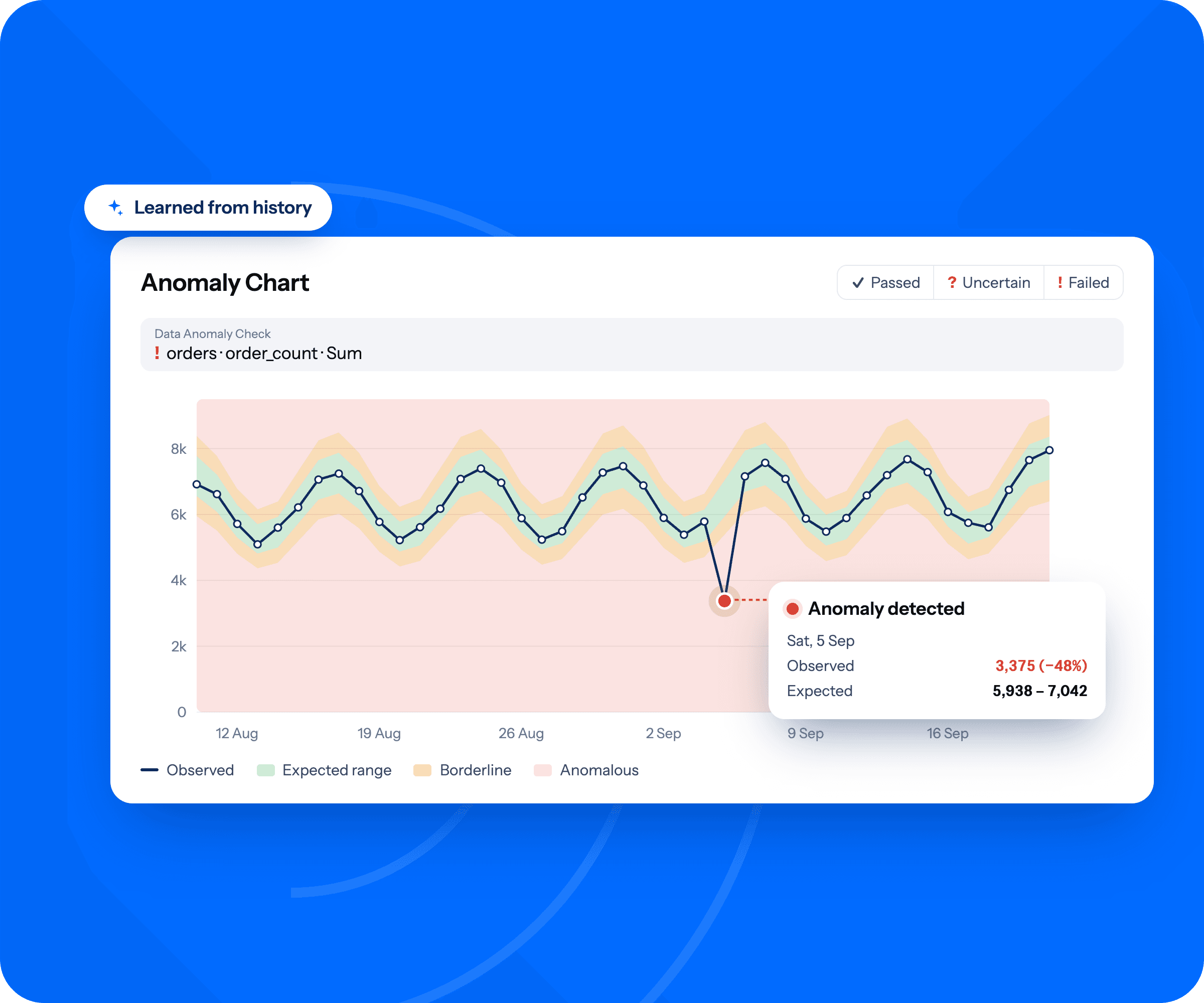
How digna Data Anomalies Works
The module calculates and monitors key metrics like Sum, Min, and value counts across three types of data in every column:
Name of Column | Type of Data | Value Example | digna Column Type |
|---|---|---|---|
Customer Name | Text | John Smith | Unspecified Data |
Type of Customer | Text | Retail / Business | Categorical Data |
Account Number | Number | AT4097012346234 | Unspecified Data |
Account Balance | Number | 167.234,01 / 12.333,89 | Numerical Data |
Overdraft Limit | Number | 20.000 / 0 | Numerical Data |
Metrics can be scoped to the entire table or a filtered subset, which we call a “Dataset”. In such a case, digna calculates metrics for every dataset independently.
Dynamic Datasets
Hybrid Datasets
Watch digna learn what normal looks like
No thresholds and no rules. These charts show what digna's anomaly model actually produced over seven months of daily inspections.
One metric, from the first inspection to today
digna needs only days: the expected range is down to ±64% after one week and ±36% after two, and keeps tightening with every inspection.
It learns your weekly rhythm
This metric swings by about half every week. digna learned the pattern, so seven months of ups and downs raised no false alarm.
It flags a break, then learns the new normal
On 27 June the value fell from 27,300 to 11,900. digna flagged four days in a row, then accepted the new level and kept watching.
It flags spikes and keeps the trend
The metric grows steadily, with sudden spikes now and then. digna follows the growth and flagged 11 spikes in seven months.

Use Case: Bank Customer Monitoring
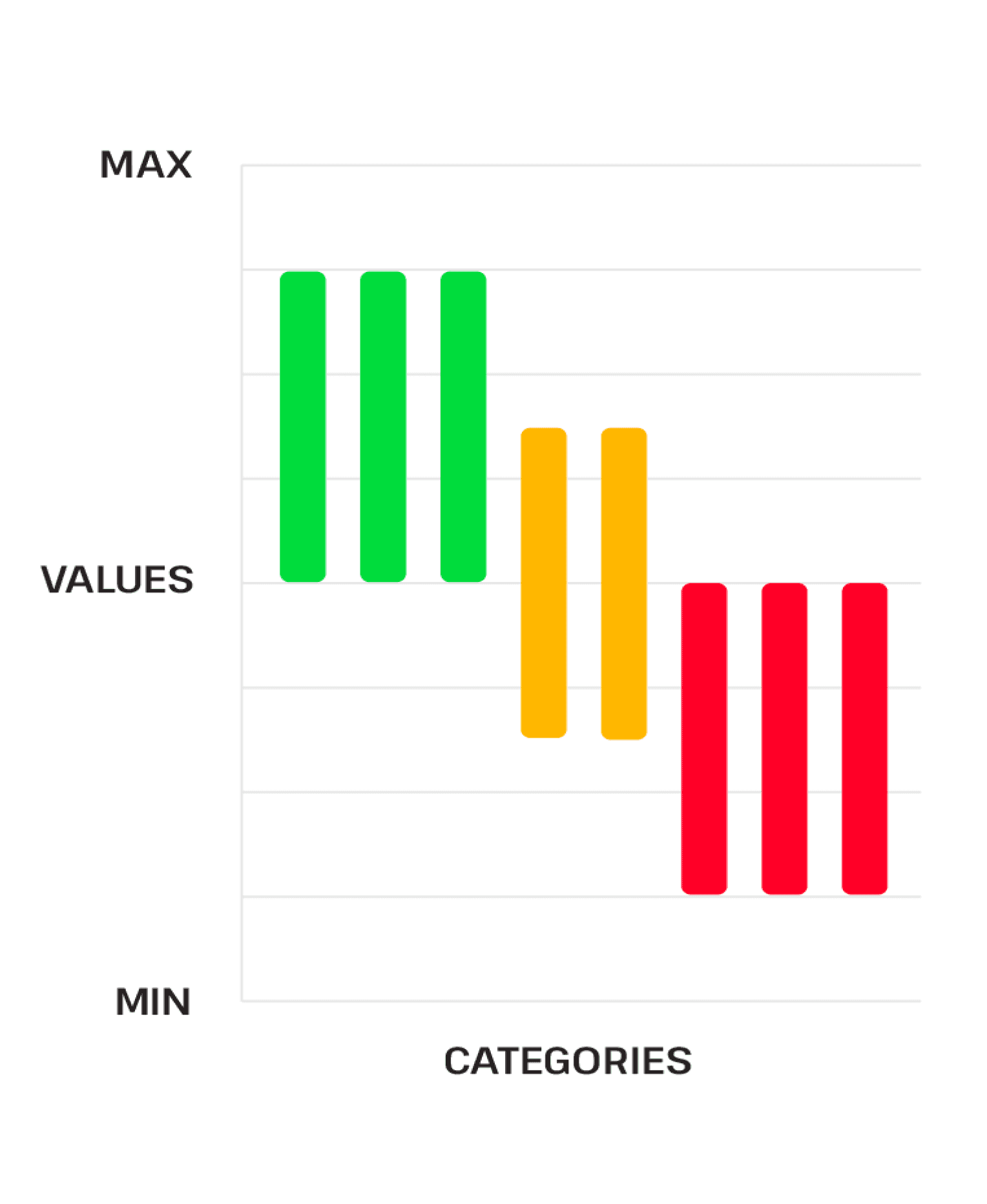


You're in Control
Not every metric is useful for every column. digna lets you:
✦ Disable metrics per column, table, or project
✦ Focus only on what matters
✦ Keep your profiling clean, fast, and tailored

FAQs
What is data observability and why does it matter?
How does AI-based data anomaly detection work in data observability?
How does AI improve data quality monitoring?
How can digna help data scientists reuse calculated observability metrics?