Ingesting Data Meaning: Pipeline, Tools, and Best Practices
|
0
minuto de lectura

Data ingestion means collecting raw data from multiple sources and moving it into a centralized repository with minimal transformation, preserving source fidelity so downstream teams can build reliable analytics and AI on top. That sounds simple, but in practice it's the first reliability gate in the pipeline, and teams feel the cost later when dashboards lag, model features go stale, or schema changes break quietly.
Table of Contents
Introduction to Why Ingestion Quality Determines Everything Downstream
Best Practices for Data Engineers Building Ingestion Pipelines
Introduction to Why Ingestion Quality Determines Everything Downstream
Ingestion is more than a copy job, it is a reliability discipline that determines what downstream teams can trust. If raw records arrive late, incomplete, or malformed, the problem does not stay at the edge of the pipeline. It shows up later as stale BI, noisy alerts, weak model inputs, and teams arguing about whose numbers are right.
The practical meaning of ingesting data is straightforward. It is the process of collecting raw data from sources and moving it into a target system with as little transformation as possible, so later stages can clean, validate, model, and govern it while the source record is still intact. That basic idea appears across vendor guidance from Databricks, IBM, and Microsoft.
The confusion starts because people hear “ingestion” and think “transfer.” In a real pipeline, transfer is only one part of the job. A good ingest path has to respect latency budgets, preserve completeness, keep duplicates under control, and make schema changes visible before downstream consumers learn about them the hard way. That is the difference between data that merely arrives and data that can support decisions. It also shows up in operational work such as how AI transcription works, where timing, structure, and accuracy affect whether the output can be used at all.
Practical rule: if the data is not trustworthy when it lands, no amount of downstream modeling will make it trustworthy later.
That is why the sections below move from definition to operating modes, then to pipeline components, real use cases, failure patterns, and the habits that keep ingestion usable at scale. If you want a concrete view of how those pipeline pieces fit together, start with a data ingestion pipeline overview.
What Data Ingestion Means
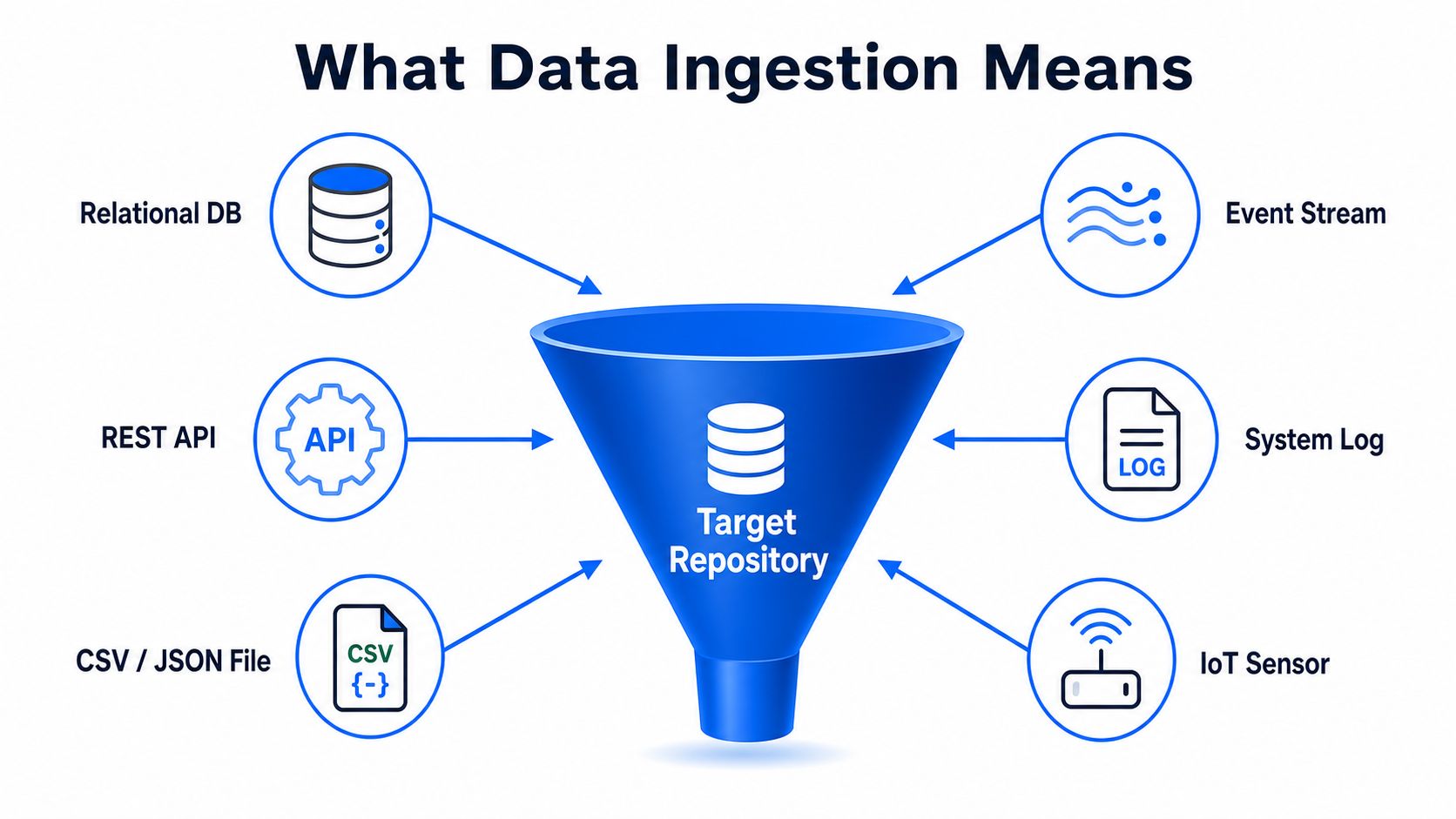
Ingestion is the intake desk for a data system. It receives the record, checks what came in, captures the basics, and routes it to the right place for later use. That work is practical, repetitive, and easy to underestimate, which is why teams often discover its cost only after something breaks downstream.
That is the heart of ingesting data meaning in a modern stack. The job is to collect raw data from source systems, databases, SaaS apps, APIs, file systems, logs, IoT devices, and streaming feeds, then place it into a data lake, warehouse, or lakehouse where analysis and automation can happen. The true measure is not whether data moved, it is whether the target system can use it without guesswork. If schema changes, duplicate records, or timing gaps slip through, the pipeline may still look busy while analytics and AI models steadily lose reliability.
A good ingestion layer also protects source fidelity. The data lands in a minimally transformed state so cleansing, validation, and governance can happen with the original record still available for comparison. That matters when an analyst needs to trace a metric back to the exact source row, or when a model team needs to compare raw input against curated features before trusting the output.
The operational value is broader than storage. As organizations moved from siloed databases to cloud-based analytics platforms, ingestion became the bridge that copied scattered information into shared systems at a pace the business could use. Informatica describes this shift as more than loading, it is the layer that supports secure transfer, pipeline readiness, and trustworthy analytics.
If you want a concrete walkthrough of how those pieces fit together, the data ingestion pipeline guide maps the path from collection to downstream use. The same operational thinking shows up in how AI transcription works, where raw input has to be prepared carefully before it can support a useful result.
Core Modes and Methods of Data Ingestion
The first decision is about how often the data should move. The second is about who initiates the movement. Those two choices, batch versus streaming, and push versus pull, shape the rest of the pipeline more than many teams expect.
Batch Versus Streaming
Batch ingestion moves data in scheduled chunks. It fits reporting, historical analysis, and many ML workflows where the system can tolerate a delay. Streaming ingestion moves data continuously, which is the better fit when the business needs fresh records for fraud detection, operational dashboards, or event-driven systems.
Mode or Method | Typical Latency | Best For | Key Trade-off |
|---|---|---|---|
Batch ingestion | Scheduled, not continuous | Reporting, historical analysis, regular ML refreshes | Lower operational complexity, but slower freshness |
Streaming ingestion | Continuous arrival | Fraud detection, live dashboards, event-driven workflows | Higher complexity, tighter monitoring needs |
Push ingestion | Source sends data automatically | Lower-latency pipelines with capable producers | More responsibility on source systems |
Pull ingestion | Pipeline fetches on a schedule | Controlled integrations and legacy systems | Easier to manage centrally, but more delay |
That table is really a decision filter. If your downstream consumer doesn't need fresh data every few seconds, batch is often the sane choice. If a delay changes the action a team takes, streaming starts to make sense.
Push Versus Pull
Push ingestion reduces latency because the source emits data as soon as it's ready. The downside is that producers have to be dependable, which means bad source behavior can spill directly into the pipeline. Pull ingestion puts the orchestration burden on the consumer side. You gain more control over timing, but you also inherit the delay between fetches.
For teams working in AI-heavy environments, this distinction matters more than it used to. A brand monitoring workflow, for example, may need fast signal capture from many sources, while other datasets can wait for a scheduled pull. GetIntel's guide to AI brand monitoring is a useful reference if you're comparing freshness requirements across multiple feeds and user-facing alerts.
Decision rule: choose the slowest mode that still supports the business outcome, then monitor freshness aggressively enough to prove it's working.
Pipeline Components That Make Ingestion Reliable
A reliable ingest path works like a chain of handoffs. If one link is weak, the break may stay hidden while volumes are low, then show up later as latency, missed records, or bad downstream joins once upstream systems change.
Collection and transport
The data collector or connector is where source-specific reality lives. It handles protocols, authentication, and schema discovery, which is why teams use connectors instead of hand-rolling every integration. The transport layer moves records securely to the destination, and in real systems it often has to manage buffering and backpressure so traffic spikes do not overwhelm the pipeline.
Staging and orchestration
The staging area is where raw records sit before transformation. That buffer matters because it preserves the original payload if downstream jobs fail or need to be replayed, and it gives teams a place to inspect duplicates, malformed fields, or late-arriving records before they reach reporting and models. The scheduler or orchestrator handles retries, dependencies, and timing, so the system behaves predictably instead of depending on someone remembering a cron job.
For architecture patterns, the data pipeline architecture page is a useful reference point because it places ingestion inside the wider operational flow instead of isolating it as a standalone copy step.
Monitoring and observability
The last piece is where many organizations underinvest. Monitoring has to cover timeliness, completeness, schema changes, duplicates, and anomalies, not just whether a job exited cleanly. That is the difference between a pipeline that ran and a pipeline that proves its output is usable.
digna is one option in that layer. Its platform runs inside the customer environment and focuses on arrival schedules, schema changes, validation, and anomaly detection, which matches the way ingestion reliability gets measured in production. Because the checks run in-database, data stays in place, which helps teams keep observability close to the systems they already govern.
A practical way to read these components is to ask where a bad record gets stopped. If the collector misses a field change, staging should expose it. If transport retries create duplicates, observability should flag the spike before analytics or AI jobs start trusting the wrong rows.
If one stage is missing, the failure often appears somewhere else, usually as a business complaint rather than a technical alert.
Real-World Examples of Data Ingestion in Practice
A useful way to judge ingestion is to ask what breaks when it's wrong. The answer changes depending on whether the data is feeding fraud logic, executive reporting, or model training.
Fraud detection
In a payment flow, streaming ingestion from transaction logs and payment APIs has to arrive fast enough for automated decisions to still matter. If the pipeline lags, the fraud model is looking at history instead of the live event stream. The operational signal to watch is freshness, because stale data can mean a missed block or a delayed response.
Executive reporting
Batch ingestion is common for ERP and CRM data because leadership reports usually care more about consistency and timing than instant updates. The key question is whether the data lands before the reporting freeze. If it doesn't, the dashboard might still look polished while the numbers underneath are already out of date.
ML feature pipelines
Feature pipelines live and die on freshness. If ingestion slows down, the training set starts drifting away from the system state, and the model learns from old conditions. That's especially risky when the business depends on patterns that change quickly, because stale features can make a model look fine in testing and unreliable in production.
Those examples connect back to a point that keeps showing up in modern guidance, including Unstructured's discussion of ingestion quality. Teams are moving from “move the data” thinking to “prove the data is usable,” especially when downstream decisions depend on timeliness, missing loads, and stable schemas.
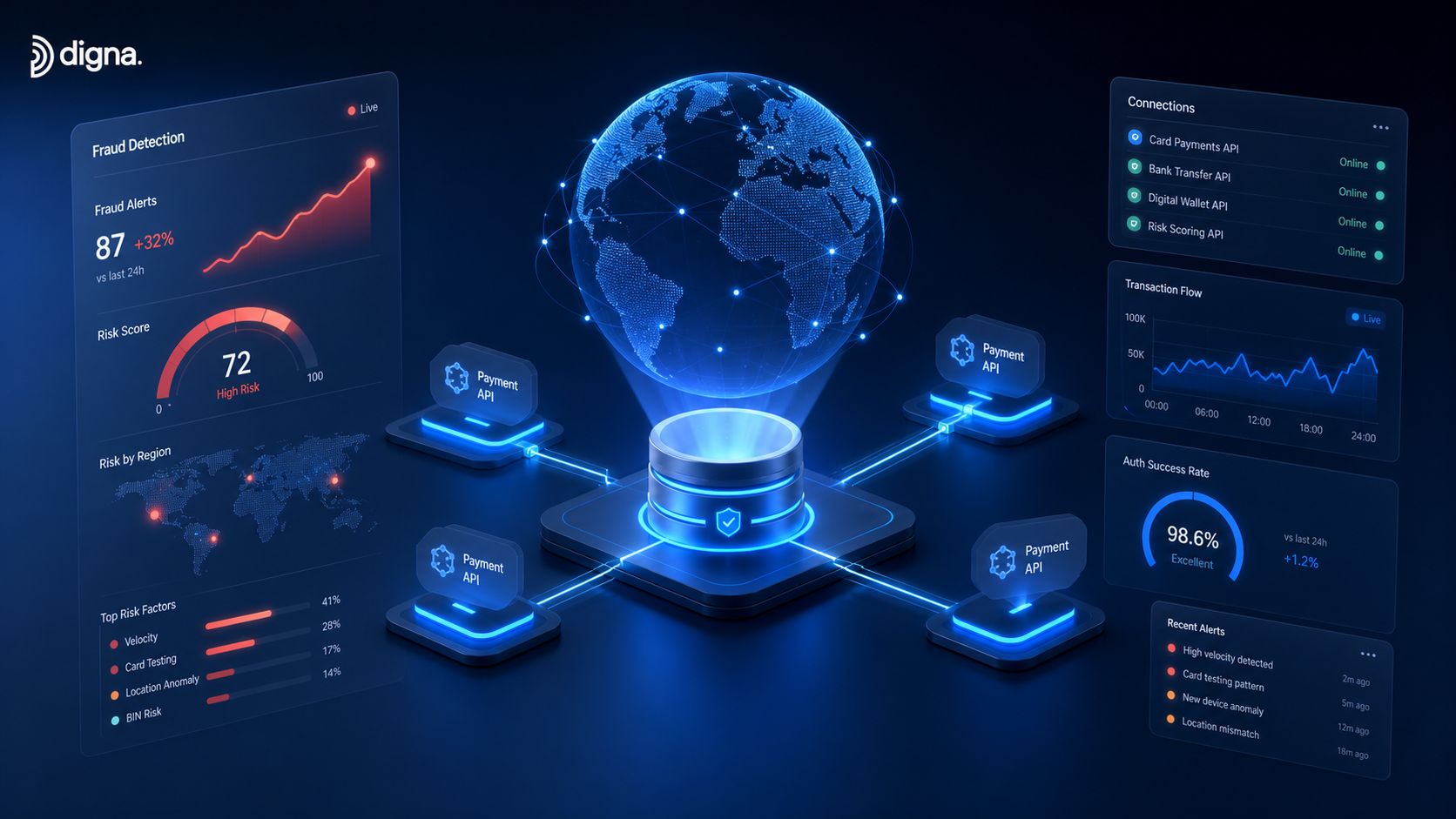
In all three cases, the engineering question is the same. How do you know the data arrived in time, in full, and in a shape the next system can use?
Common Ingestion Pitfalls and How They Propagate
The expensive part of ingestion problems is that they rarely stay local. A small issue at the source can become a business problem several layers later, and by then the root cause looks unrelated.
Latency drift
Latency drift happens when data starts arriving later than expected and nobody notices right away. The immediate symptom is often a dashboard that looks “fine” but reflects old conditions. For a team making daily decisions, that delay can be enough to change what they do next.
Duplicate records
Duplicate records are trickier because they can make numbers look healthier than they are. At-least-once delivery is useful for reliability, but it can inflate counts if the pipeline doesn't deduplicate intelligently. The damage usually shows up in funnels, revenue totals, and event-based metrics that people assume are clean.
Schema drift
Schema drift is the quietest failure of the three. An upstream team adds a column, changes a type, or renames a field, and downstream consumers either break or keep running with the wrong assumptions. The worst part is that the failure can be partial, so some queries succeed while others fail or return nonsense.
Operational truth: late data, duplicate data, and shape changes are often less about transport bugs and more about missing visibility.
This is why finance, healthcare, telecom, and public sector teams have moved toward evidence-based ingestion checks. They need proof that the ingest path is reliable enough for regulated or mission-critical decisions, not just proof that bytes were moved. When observability is weak, the pipeline can still “succeed” while the business sees stale, inflated, or incomplete outputs.
Best Practices for Data Engineers Building Ingestion Pipelines
The strongest ingestion teams don't rely on hope or one-time setup. They build habits that make failure visible early and recovery boring.
Start with raw preservation
Keep raw source data in staging before transformation. That gives you a clean escape hatch when a downstream job fails or a business rule changes. It also makes audit and reprocessing much easier, because the original payload is still available.
Make retries safe
Use idempotent loads so retrying a job doesn't create duplicate inflation. If a pipeline has to run twice, the second run should not rewrite reality. That one design choice prevents a lot of metric confusion later.
Monitor before users complain
Set timeliness SLAs with realistic arrival windows, then alert when the system misses them. Track schema changes continuously, and don't wait for a downstream query to discover a broken field. In practice, the best teams combine deterministic checks with AI-driven baseline learning so they can spot both known failures and new patterns.
Keep the operational checklist short
Preserve Raw Data: store originals in staging so you can replay or audit later.
Use Idempotent Loads: design retries so they don't create duplicates.
Monitor Early: set alerts before the pipeline becomes business-critical.
Track Schema Evolution: flag added, removed, or changed fields quickly.
Document Ownership: assign runbooks, escalation paths, and regression checks.
A platform like digna's data ingestion software fits into that kind of operating model because it focuses on arrival behavior, schema drift, and record-level validation inside the customer environment. That in-database design matters when security and governance requirements make data movement harder to justify.
The main point is simple. Don't wait until the pipeline is “big enough” to care about observability. By then, the cost of ignorance is already part of the architecture.
Conclusion From Ingestion as Transfer to Ingestion as Trust
Data ingestion starts as a transfer step, but it becomes a trust layer the moment other teams depend on it. Once BI dashboards, feature stores, and automated decisions rely on those records, the ingest path stops being plumbing and starts being a business control point.
The core choices stay the same across environments. Batch and streaming set the freshness model. Push and pull set the ownership model. The five pipeline components, collection, transport, staging, orchestration, and observability, decide whether the system can survive real-world change. The common pitfalls, latency drift, duplicates, and schema drift, show up as broken trust if you don't catch them early.
That shift from moving data to proving usability is already visible in modern data programs, especially where decisions carry compliance or operational risk. Teams don't just want records in a warehouse. They want evidence that the ingest path is timely, complete, and stable enough to support the next action.
If you're tightening that part of your stack, focus on the signals that matter most to your users, then build checks around them. The teams that do that well spend less time arguing about dashboards and more time using them.
If you're ready to make ingestion reliability visible instead of guessed, explore digna. It's built to monitor timeliness, schema changes, validation, and anomalies inside your own environment, which makes it a practical fit for teams that need trustworthy pipelines without extra data movement.