Introducing digna Release 2025.09 — A Modular Architecture for Data Quality and Observability
|
2
min read
With Release 2025.09, digna unveils a major step forward in its mission to make enterprise data reliable, explainable, and secure — a landmark update that transforms digna from a unified platform into a powerful, flexible suite of specialized modules. This latest version introduces a modular architecture and five specialized AI-powered modules that give organizations full control over every dimension of data quality and observability.
A Platform Built Around What You Need
The new modular design allows customers to activate only the modules they need — and expand seamlessly as requirements grow.
This approach brings flexibility, scalability, and simplicity to data reliability operations, aligning perfectly with modern enterprise architectures.
The New digna Modules
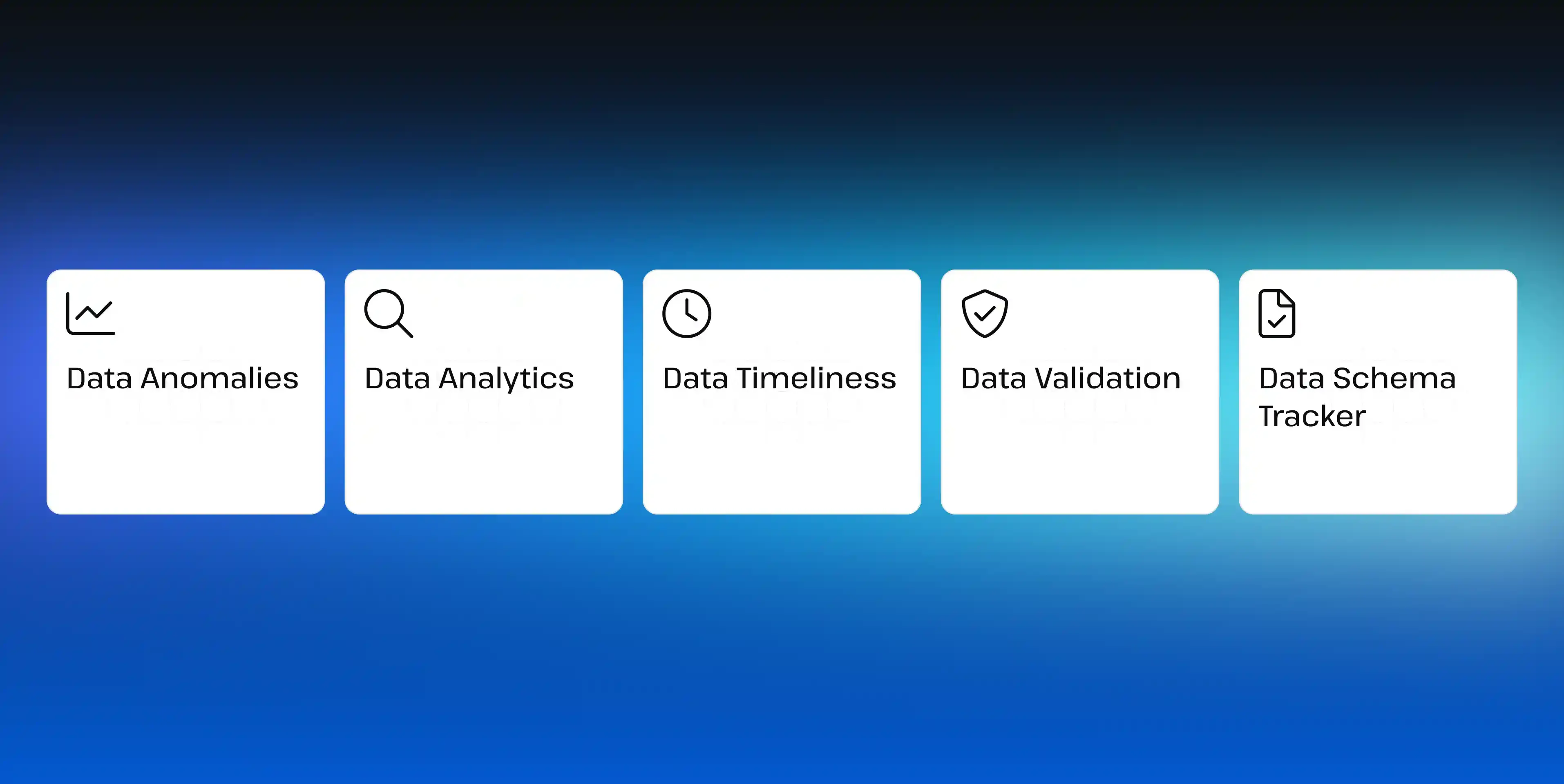
With Release 2025.09, we’ve broken down our capabilities into five specialized modules, providing focused solutions for every data reliability challenge. Our previous core functionality is now consolidated under digna Data Anomalies.
The original engine of trust. This module provides AI-powered detection of anomalies in the fundamental characteristics of your data: tracking subtle shifts in data volumes, distributions, and missing values.
This module allows for time-series evaluation of observability metrics to identify long-term trends and volatility. It helps you answer complex questions like: Is our platform usage trending up faster than expected? Are there seasonal patterns that impact latency?
A crucial piece of data observability. This module monitors expected data arrival times, leveraging both AI-based and rule-based monitoring to ensure your pipelines are consistently delivering data when it’s supposed to be there. No more missing SLA deadlines due to delayed batches.
This module focuses on rule-based, record-level checks to ensure data compliance with critical business rules. It’s perfect for ensuring every transaction, every customer record, and every metric adheres to your non-negotiable standards.
This module provides real-time detection of schema changes (DDL modifications) in monitored databases. Catching a sudden column drop or type change instantly prevents catastrophic, downstream pipeline failures.
Enhanced Security and Authentication
Release 2025.09 introduces Multi-Factor Authentication (MFA) through OIDC Single Sign-On, bringing enterprise-grade security and identity management to all user logins.
Smarter Notifications
Notification handling has been upgraded: alerts are now sent per module, allowing teams to separate operational, analytical, and validation-related messages. This helps reduce noise and improve incident response.
Command-Line Interface (CLI) Enhancements
The digna CLI gets several important updates for smoother administration and monitoring:
inspect-cancel – Cancel inspections by request ID or stop all active requests
check-config – Validate configuration files before startup
remove-orphans – Clean up orphaned repository entries
inspect (enhanced) – New bypass option (--bypass-backend) and standardized return codes
Updated Documentation and Guides
To support this release, we’ve added new technical guides — including the Single Sign-On Integration Guide and updated CLI documentation.
Read the full changelog and documentation here 👉 https://docs.digna.ai/changelog/Release_202509/
This release represents digna’s continued commitment to simplifying enterprise data quality and observability.
By making the platform modular, more secure, and more intuitive, we’re giving organizations the tools to achieve trusted data at scale — faster than ever before.
Explore digna Release 2025.09 today — the modular, secure, and intelligent way to ensure your data is always reliable.
If you already script digna administration with the enhanced CLI, the digna Python SDK is the programmatic counterpart for working with digna from your own code.
Frequently asked questions
What is new in digna Release 2025.09?
Release 2025.09 introduces a modular architecture with five specialized AI-powered modules: Data Anomalies, Data Analytics, Timeliness, Data Validation and Schema Tracker. It also adds Multi-Factor Authentication through OIDC Single Sign-On, per-module notifications, several CLI enhancements, and new guides such as the Single Sign-On Integration Guide.
Can I activate only some digna modules?
Yes. The modular design in Release 2025.09 lets customers activate only the modules they need and expand seamlessly as requirements grow. The previous core functionality is now consolidated under digna Data Anomalies, while the other four modules address analytics, timeliness, validation and schema changes separately.
What does the digna Schema Tracker module do?
Schema Tracker provides real-time detection of schema changes, meaning DDL modifications, in monitored databases. It is one of the five specialized modules introduced in Release 2025.09, and the release post explains that catching a sudden column drop or type change instantly prevents catastrophic downstream pipeline failures.
How does digna Release 2025.09 handle notifications?
Notifications are now sent per module, so teams can separate operational, analytical and validation-related messages instead of receiving one combined stream. The release post says this upgrade helps reduce alert noise and improve incident response, and it ships alongside the new modular architecture introduced in 2025.09.
Which CLI commands were added or changed in digna 2025.09?
The digna CLI gained inspect-cancel to cancel inspections by request ID or stop all active requests, check-config to validate configuration files before startup, and remove-orphans to clean up orphaned repository entries. The inspect command was enhanced with a --bypass-backend option and standardized return codes.